Wednesday, October 4, 2017

Teaching with Technology

Technology has become commonplace in classrooms across the world. From computers, to interactive whiteboards, to smartphones, technology is augmenting learning in increasingly complex ways. From the new Digital Technologies curriculum from the Ministry of Education, to blended and online learning initiatives in tertiary institutions, technology also has the capacity to significantly impact the manner in which ESOL teachers do their jobs.

However, there are significant barriers when adopting technology. For example, equipment can be costly, many online services have associated charges, and appropriate professional development can be elusive. That being said, technology has the capacity to allow for personalized learning, enhanced collaboration, and more time on the provision of feedback.

In order to ensure that technology affects learning in a positive manner, it is critical that educators have a strong understanding of the many ways in which it can alter the teaching and learning process. Thankfully there are a range of frameworks which can be used to guide and understand the implementation of tech tools.

One such framework is the SAMR framework[1], by Ruben Puentedura. SAMR stands for Substitution, Augmentation, Modification, Redefinition. Essentially, this framework helps teachers identify the outcome of employing any particular tech tool. Technology may act as a direct substitute, with no functional change. Conversely, technology may allow for extensive redefinition of a task; allowing for previously unavailable pathways of learning. When employing technology in the classroom, it is important that we are adding value.

In Yong Zhao’s 2015 article [2]on the need for a paradigm shift to cultivate 21st century learners, he pointed to several ways in which technology could be of benefit. These included personalized learning, ownership of the learning process, and enhanced collaboration.
Fortunately, there are a number of tools available that allow us to achieve these types of benefit, while modifying or redefining ESOL learning.  This article introduces a web-based reading platform as well as a collaborative tool.

Readtheory.org [3]is an online platform which allows teachers to form classes and have students complete level-appropriate reading comprehension tasks. The tasks are computer-adaptive; as students get more answers correct, the reading will become more challenging. Student level is based on an initial reading comprehension task. As a teacher, the real power of this tool comes through in the progress reports which teachers can access. Teachers can see how many tasks students have completed, how many tasks were above the pre-test level, as well as the students lexile level. In addition, teachers can see which question types students have struggled with (e.g. key ideas, details, structure, or integration of knowledge). All in all, this provides some powerful insight into our students’ reading abilities.

Padlet [4]is a collaborative tool which can be accessed via a computer or smartphone app. Padlet promotes itself as “paper for your screen,” and it very much is. One way to think of it is like ‘sticky notes’ which can be posted on a wall. I’ve used Padlet to provide grammar practice. I ask students to post examples of correct usage of a given tense. Students then write these into Padlet. The power of Padlet as a tool, however, is that students post in real-time. Students see others’ contributions as they are making their own and can offer feedback on incorrect language (or notice errors in their own post). This makes for a truly collaborative, engaging experience.

That being said, technology does have potential drawbacks. Many of these are barriers to implementation. For example, the cost of equipment or online services. In addition, finding the right tool for the job can be a challenge given the abundance of available tools. In order to navigate these barriers and overcome the potential pitfalls, online communities are a great help. On Facebook, there are groups such as #AusELT. In addition, there are blogs such as “Nik’s QuickShout.”

By using technology in an intelligent way, we can truly redefine the classroom experience.


[1] elearning.tki.org.nz/professional-learning/Teacher-inquiry/SAMR-model
[2] http://zhaolearning.com/2015/04/06/a-world-at-risk-an-imperative-for-a-paradigm-shift-to-cultivate-21st-century-learners1
[3] https://readtheory.org
[4] https://padlet.com

Talking the Talk: Is it time for a Christchurch Language Policy?

A review of Professor Joseph Lo Bianco’s visit to New Zealand

By Daryl Streat – Lincoln University

Christchurch, in more ways than one, is a city with a changing face. While the city is the process of physically transforming its buildings and scenery, the more significant change is in fact occurring amongst its residents. From 2001 to 2013, Christchurch became a much more diverse city. What’s more, there are high levels of diversity at young ages. In 2013, it was reported that almost 40% of 0 to 4-year-olds identified as non-European. The earthquake rebuild has only increased the speed of this diversification.

The has made Christchurch a much more vibrant city, with a strong mix of cultures and languages encountered daily. If significant action is not taken to maintain this diversity (and especially language) then we risk losing some of what this great city has become.

A suitable language policy, to sit alongside our new Multi-Cultural strategy, would be a significant step in the right direction. A robust language policy would not only re-affirm the importance of te reo Māori and New Zealand Sign Language (NZSL), but would go a long way to ensure adequate ESOL provision for new arrivals and help maintain minority languages within the community.

Language policy in New Zealand
Of course, this has been attempted before. The Ministry of Education authored Aoteareo: Speaking for Ourselves, as a step towards a national language policy. But that was 26 years ago! Professor Joseph Lo Bianco’s visit to New Zealand served to spark discussion around the need for a coherent language policy to support all languages, both nationally and in Ōtautahi, Christchurch.

Professor Joseph Lo Bianco
Professor Joseph Lo Bianco, University of Melbourne, is a leading expert in national language planning. He helped author Australia’s multilingual national language policy and has developed language policies for a range of countries.

On August 23rd, Professor Bianco spoke at Auckland University of Technology on the importance of a national language policy for New Zealand.  This presentation was part of a series of talks sponsored by AUT, TESOLANZ, Asia New Zealand Foundation, COMET Auckland, NZALT, Victoria University of Wellington, and the Royal Society Te Apārangi. Professor Bianco showed how language policy development is a multi-faceted problem as planners must deal with a wide range of views.

Professor Bianco pointed out how language is a cultural, community, and educational resource. This resource serves all parts of the community. However, without adequate support, languages can disappear, or never develop in the first place.

What next?
Language policy in Ōtautahi, Christchurch must reflect our city. Not only must a policy affirm a place of importance for te reo Māori, and NZSL, but Christchurch must foster the conditions under which the languages of our newest residents can be protected. And finally, as stated in Languages in Aotearoa New Zealand (the Royal Society of New Zealand, 2013), we must ensure equitable access to ESOL.


If a multi-cultural, integrated society is something that the Christchurch City Council (CCC) wants to bring to fruition, then the CCC must take the language question seriously. For where language is not fostered and protected, culture struggles to survive. 

Saturday, August 27, 2016

Blogging Your Way To Greater Engagement

One of the most important roles we fulfill as language teachers is create opportunities for engagement with language our students are attempting to acquire.  Of course, we have time devoted to this in the classroom.  However, as many teachers know (especially those working in foreign language contexts) the opportunities for practice and engagement are often insufficient for effective acquisition to take place.

For me, there are two ways I have tried to bridge this gap and foster greater engagement.  These are social media and blogs.


Social Media
I've tried and tried to use Learning Management Systems (LMS - such as moodle) to foster greater engagement.  And while this does work as an addendum to lesson content, or for quizzes and submission of assignments, the students are not 'there' all the time.  This led me to make the decision to go (online) to where my students are.  As a result I'm now using Twitter, WeChat, Line, and Facebook groups to build greater engagement with my students.  Of course, use of such technologies does blur the space between classroom and the social sphere.  There are issues with this.  But one thing I cannot deny is the explosion in engagement for many of my learners.

Blogs
Blogs were the first way I started to explore the online space with my students.  I've started blogs for my Business English students (http://daryliti.blogspot.co.nz/) as well as for my EAP students (http://darylacademicenglish.blogspot.co.nz/).  These have had success as online repositories for my students to access resources which allow them to find their own learning opportunities.

If blogging is something you're interested in, I'd highly recommend reading the following post by Matthew Loomis - Teaching Blogs 2016: How to Benefit Your Students, Your Peers, and Your Pocketbook, by Starting an Educational Class Blog

Thursday, May 12, 2016

Reading! The Secret to Success!

One of the best ways for students to improve their English vocabulary and comprehension is through reading.  Of course, this reading has to be level appropriate.  In addition, if they can find a resource which aids them in practicing certain strategies, all the better!  The following is a list of online reading resources I've made use of over the past 6 months.

Read Theory - This one is my favorite. It's free and adjusts to your level.  Everyone should be doing this!!!

My English Pages - A special page for English language learners with lots of different texts.

100 Essays - These are mainly American, but provide some good practice.

5 Minute English - Again, lots of different reading exercises for English language learning.

Reading Labs - University of Victoria reading exercises.  Lots of different levels.

University of Illinois - Lots of different kinds of exercises (not only reading)

Teacher Phil English - This is a Youtube site which has some really good explanations of Wikipedia readings.

*edit*

I'm adding two additional sites to this post:

Literacy Net Reading Resources - a great collection on many different topics.

VOA Learning English - This combines reading and listening on current news stories.


Thursday, August 6, 2015

Ready, set... ENGAGE!

In order for our students to maximize their opportunities for English learning, they must take part in English learning activities outside of the classroom. In addition, they must be part of a wider community of English language users. For many students, it can be difficult to find suitable activities outside of the classroom and some may lack the confidence required to broaden their communities on their own.

As teachers, the amount of reach we have to our learners is traditionally limited to the contact time we have in class or during office hours. If we are able to extend this potential for contact to times away from class, we can increase students' opportunities to use the language as well as create communities of users.

 In this post I'd like to suggest two key ways in which this can be done.

Firstly, Blogs!


Via blogs, we can effectively categorize and share diverse amounts of information with a group of students.  From videos, to links, to even songs, students are able to experience a wider variety of content at their own pace.  This can be used to extend class content or even to just support it.  In addition, students are able to engage by commenting or even taking on an administrator role.


Secondly, Facebook!
Closed Facebook groups provide us with an opportunity to readily create communities outside of the classroom in which students can easily engage.  Whether through their computers or smartphones, they are able to comment, share,and even collaborate (via google docs) very easily.

Such resources allow us to easily extend our reach and increase our learners' opportunities to engage with the language.  

Thursday, June 25, 2015

HOLY GRAMMAR BATMAN!


There are a number of absolutely AMAZING grammar resources these days.  Many of these are freely available as either websites, online activities, or apps.  Of course, there are also some superb options available for purchase.

Websites - Explanations and Resources (many of these also have practice activities)
Guide to Grammar & Writing
Verb Tense Tutorial - Englishpage
Grammar Monster
English Grammar Guide - Edufind
English Grammar Online
English Grammar - British Council
BBC - Learning English
Perfect English Grammar (my personal favorite)
Grammarly - Online Grammar Handbook

Quizzes / Tests / Activities
Using English
Interactive Quizzes
Grammar Bytes - Exercises
Grammar Gorillas
Perfect English Grammar Exercises
English Media Lab
English Teacher Melanie
Road to Grammar

VIDEOS!
English Grammar Spot
Johnny Grammar's Grammar Movies - British Council
English Grammar Lessons - Let's Talk
English Lessons 4U
English Central
English with Adam

APPS
iOS (iphone / ipad) apps
Android apps

Grammar Learning Options
Azar Grammar
Alisona - Fundamentals of English Grammar
QUILL - Online courses in Grammar
Brainpop - Learn the Language

Technical / Academic Writing Guides
Labwrite
NASA Technical Reports
Using English Grammar for Academic Writing
University of Reading Study Advice - Grammar
Dr Hazel Hall
Student Writing Support - University of Minnesota
Using Grammar for Academic Writing - La Trobe University

Cohesion
Linking Words and Phrases

15 Grammar Goofs!
15 Grammar Goofs That Make You Look Silly
Like this infographic? Get more content marketing tips from Copyblogger.

Monday, December 15, 2014

Comprehension Check Questions

Comprehension checking is achieved with effective questioning.  We might want to check students' comprehension of either concepts or instructions.  For this, we can't just ask, do you understand?  We need to ask specific questions that check understanding.


Error Correction

Here's an excellent video illustrating some error correction techniques.  Very useful for beginning instructors or experienced ones who desire a refresher...

Wednesday, December 3, 2014

Student Management vs Student Engagement

Effective classroom management is critical to a successful in-class learning experience.  But, is it enough?  We plan and structure our classes to allow for smooth transition between stages of a lesson and to assist students in achieving the overall goal of the lesson.  But if students are not engaged in class content, how well will they retain what has been covered?

Student engagement is critical in a modern learning environment in which students already have a wide variety of entertaining content at their finger tips.  If our lessons successfully engage students, then they will learn.

So, what is student engagement?  edglossary.com defines it as "the degree of attention, curiosity, interest, optimism and passion that students show when they are learning or being taught, which extends to the level of motivation they have to learn and progress in their education."  Of course, this level of engagement is going to vary from learner to learner and will be different at certain times of the day or week.  Engagement is very much an individual thing...

But, what can we do to increase engagement?  There are 4 things I try to do in any class to raise levels of engagement in the class.  1) Allow for individual differences. 2) Teach for mastery. 3) Allow for originality and expression. 4) Promote autonomy.

1) Individual Differences - All of learners are different.  They are individuals.  They have different needs and characteristics.  Not only do we need to understand our learners on an individual level, but we need to provide for differences in the ways that students learn.  By promoting open communication and discussion with learners we can learn more about them.  In addition, a basic needs analysis at the start of the semester can help us to paint a better picture.  Then, by planning class activities that allow for different ways of learning (learning styles, interaction patterns) we can accommodate individuals.

2) Teach for Mastery - It is critical for motivation that learners experience success.  We need to make sure we praise often and create learning opportunities that allow students to be successful.  Of course, this becomes more difficult in multilevel classrooms.  In such situations, we should offer differentiated instruction that grants a range of learning opportunities to learners at different levels.  Everyone likes to experience success and be praised for it!

3) Allow for originality and expression - This basically means moving the focus away from you, the teacher.  For our learners to produce language, practice, and work on fluency, they need to speak up and out.  In an environment in which we feel our opinions and ideas are valued, we will be much more likely to do so.  Once again, by promoting open communication, learners will more readily express themselves and further develop their confidence and skills in speaking.

4) Promote Autonomy - If learners only study/acquire language in the classroom, it will be very difficult for them to improve.  Language acquisition must take place in the real world (outside the classroom).  This is more likely to happen if learners have both the desire and knowledge to take control of their own learning.  Hopefully, if the classroom provides for the first three items on this list, the desire to learn more will be there.  Then, it comes down to the teacher to educate learners on the strategies and resources they can use to learn in their own time (songs, videos, books, websites, etc.).  If learners are able to learn on their own, they will more readily meet their individual learning needs.

All in all, an engaged classroom is not just a better place for students to learn and acquire language, it's also a FUN place for a teacher to work.  And all of us are more engaged when we are having fun.

If you'd like to read more, here's a link to a story on facultyfocus.com

Monday, November 24, 2014

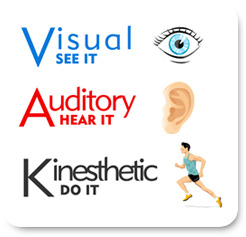
Teaching Different Styles of Learners

Different learning styles create different opportunities for learning success.  If we accommodate for different learning styles, we not only increase engagement with learners, but we also increase the amount of variety in our lessons.  Here are some great links to resources on different activities for different styles of learning:

Saturday, November 22, 2014

More Warmers, Ice-Breakers & Lead-Ins

Find the link here:
LINK

For more great ideas, visit: http://teflgeek.net/

7 Teaching Ideas

BusyTeacher.org has some great lists of different teaching activities and ideas.  These are easy, creative, and require little preparation.

Link HERE


Monday, November 17, 2014

Fruits and Vegetables - A Warmer / Icebreaker

Here is a link to aFruits and Vegetables warmer I've often used with new groups...


Friday, June 20, 2014

Listen to the News

News & Headlines Listening Tasks

News can be a great way to bring authentic listening into the classroom.  Some great places to find News to use in the classroom are:

VOA - Voice of America
BBC - BBC Learning English
BBC - News Headlines

Krashen’s (1981) theory of Comprehensible Input offers that for language learning to occur, sufficient input (at a level that can be understood) must be received by the learner.  Nation & Newton (2009) extend this idea specifically to listening via his approaches for Meaning-Focused Listening.  The acronym “MINUS” can be used to test the conditions for meaningful listening.

MMeaningful: Is the input a piece of meaningful communication?
IInteresting: Does the input contain information that will prove interesting to the learner?    
N – New Items: What learnable language, ideas, skills or text types (LIST) will learners meet through the listening experience?
U – Understanding: Can the learners understand the input? How is understanding assisted (e.g. controlling the level of difficulty, scaffolded learning)?
S – Stress-free: How is stress and anxiety controlled?
Nation & Newton (2009) 

Two methods of in-class listening are proposed below.  These methods meet MINUS requirements.

KWL (Know / Want to Know / Learned)
KWL is a reading (input) comprehension established by Ogle (1986) that seeks to aid understanding.  Firstly, prior knowledge is activated.  Then, students highlight set goals for comprehension (identifying what they would like to know more about).  Finally, students identify what they have learned.
Find the File HERE

Information Transfer – News Grid
Information Transfer (IT) tasks have been identified (Palmer, 1982) as an effective method for gauging comprehension as they force learners to change the form of the input they hear (or read).  A second advantage of IT tasks is that they can be much easier to create than sets of comprehension questions.
Find the File HERE


Krashen, S. (1981). Second Language Acquisition and Second Language Learning. Oxford: Pergamon Press.
Ogle, D.M. (1986). "K-W-L: A teaching model that develops active reading of expository text." Reading Teacher, 39, 564-570. K-W-L Reading Method.
Nation, I.S.P. and Newton, J. (2009) Teaching ESL/EFL Listening and Speaking. New York: Routledge. 205 pages. ISBN 978-0-415-98970-1
Palmer, D. M. (1982). Information Transfer for Listening and Reading. English Teaching Forum 20, (1), 29–33. 

Wednesday, April 23, 2014

The Big Board

In any language class, the presentation stage of a lesson is key to effectively illustrating to learners important language features.  There are many ways to do this:

  • PowerPoint
  • Graphics


But my personal favorite is the trusty (and dusty) blackboard.

However, for something that is often the focal point of a lesson, we can sometimes find ourselves not giving sufficient planning to it.  What follows is a few key guidelines I use for developing my boards:

  • N - Neat: Make sure your board is not overly cluttered
  • I - Informative: The board should hold the relevant information
  • C - Color: Effective use of color can clarify and interest
  • E - Easy to Understand: Learners should be able to quickly comprehend the board


Here is a sample board I used for a recent lesson on the present perfect.


Now, once the board is set for class, we can use it for the presentation stage of our lesson.  However, simply ending there and erasing might be a waste.  I like to have my learners interact with the board and add either examples of the target language or what what they perceive to be relevant information.  In this way, learners engage with the board and become involved in the presentation stage of the lesson.


Saturday, September 28, 2013

Songs for Grammar

I've always been a fan of using either songs or movie clips so show language in context. If you can use clips that relate to your learners' own lives (e.g. movies or songs suggested by them) then it adds even further interest and motivation to the learning of language/grammar. However, one of the big obstacles with using songs is of course the difficulty in actually 'hearing' the lyrics. We've all heard those songs in which we mishear lyrics - Hendrix: "Kiss this guy"... Therefore, lyric videos are a great way to overcome this as they display lyrics within the video. If you search Youtube for "official Lyric Video" you can find some amazingly produced example of lyric videos. Anyhow, here are some great examples I've found and the grammar/language they could be used to highlight:

 The Summer Set, Boomerang - Second Conditionals

 Tegan & Sara, I was a Fool - Simple past

 P!nk, Just Give me a Reason - Present Perfect / Present Perfect Progressive

 Taylor Swift, We Are Never Ever Getting Back Together - Past tenses, Present Progressive

 I've used such videos to do the following:
  Focus on Changing Tenses - for example, in the song "We Never Ever Getting Back Together", have students focus on why the tenses change (i.e. showing how past actions can affect present states)
  How many? - Have students spot incidences of target language (i.e. how many times are 2nd Conditionals used in "Boomerang"?)

 Larry Ferlazzo's great blog also had a post on Lyric Videos

Friday, May 6, 2011

Vocabulary Learning With Reading Materials

In the course I teach in, learners are required to read a number of graded readers each term. There has been extensive research into vocabulary acquisition via reading. Whilst the proponents of acquisition via extensive reading (Krashen) and the proponents of intensive vocabulary learning might be at loggerheads, not many people can argue with the fact that motivated learners who take ownership of their learning will be in a better position to actually acquire new language.
It was with this in mind that I started to think about the processes my students go through in trying to acquire new language from graded readers.
The first step was to notice the new language. With this in mind I asked my learners to highlight or circle any words in the reader which they were unfamiliar with.


The learners recorded these words on a vocabulary bookmark (which they made and decorated themselves).


At the end of each week, as a class we went through our vocabulary bookmarks and identified a group of words (5-10) that we were not sure about. The learners recorded these words on vocabulary cards and over the weekend found out the Chinese translations of the words using their dictionaries.


While the learners were finding their vocabulary translations, I made up a set of cards that contained the target words, a Chinese translation, and an example sentence.


When the learners came back to school with their translations done, they had hopefully gained a better understanding of the words (through the act of defining). Each learner was assigned one of the above cards and asked to write two sentences of their own on the backs of their cards, using a cloze format.


Once this was done, the learners used their self-made cloze sentences to ‘test’ one another’s understanding of the vocabulary. This was done in a fun game-like way and the student with the highest score was awarded a prize at the end of the week.
The whole process took about two weeks yet only required a minimal amount of extra class time. The benefits for this format were that the learners essentially selected their own target vocabulary. In addition, they got repeated and time-spaced exposures to the target vocabulary over a period of time. Such repeated, spaced exposures make retention more likely.

The first time this was done, all students worked from the same graded reader. This had the benefit of learners focusing on the same contexts for vocabulary and thus aided the procedure familiarization process. Subsequently, learners were able to engage in the same process but with their own individual graded readers.
I can highly recommend any procedures that we, as teachers, use to involve our learners in the vocabulary learning process. Have you had any success?

Sunday, April 24, 2011

Drama! Drama! Drama!


For 3 years now I’ve been teaching drama in an ELT program in Taiwan. Each year my grade 7 learners put on a drama show. Each homeroom class puts on a separate short play. During this time I’ve made a few observations in terms of how drama can aid English language learning as well as promoting learner confidence and learner autonomy.
Drama holds great power for helping learners improve their fluency, intonation and speech rhythm. In terms of fluency, they will practice saying many of the same things multiple times – the key here is getting them to say those things in a fluent and natural-sounding manner. This is where drama teachers can be extremely helpful in providing models of natural speech intonation and rhythm. However, this can only work if the text one is working with is well within the learner’s ability level. If there are too many unknown words then they will not be able to focus on producing fluent speech. Similarly, if the text consists of long chunks of text, low level learners will have great difficulty in saying their lines in a fluent fashion. To this end, teachers have a significant role to play in text selection. Most commercially available texts will be inappropriate (long chunks, unknown words) for English language learners. Therefore, teachers will either have to modify texts or write their own.
Putting on a play can require a lot of work. In-class role-plays are simply done, but if you’re planning to put on a show then there is a wide variety of jobs that must be completed. From choosing music, designing costumes, making props, choreographing dances, as well as positioning actors on stage, there is a wide variety of jobs which students can take responsibility for. By successfully completing such tasks, students can raise their self-confidence, build teamwork through working towards a common goal with others, and introduce their own ideas and creativity to the classroom. Such actions allow students to really take ownership of the task (putting on a play).
The fact that my learners perform many of these functions in English leads them to raised confidence and self-awareness of their English abilities. It also gives learners a reason for using English other than the normal classroom tasks.

Wednesday, November 17, 2010

Graded Readers – Guided Journal Writing

Well it has been a while… MA and new baby have been keeping me busy…

At the start of September I was faced with another semester of teaching a graded reader with my grade 9 class. It was going to be the same old process of highlighting vocabulary, discussing themes, and answering comprehension questions. The students traditionally had exam questions that focused on exploring the themes of the text.

However, I had become frustrated with the lack of thought put into these explorations on the part of the students. In addition, the students were relying on me to tell them what I wanted to write (a situation which I probably promoted). The students also felt the text examination process was a little bit boring.

What I really wanted was to take a somewhat boring activity (novel study) and turn it into a thought-provoking discussion of the text.

Of course, English learners would require more time to formulate their ideas and responses to the text.

At this point I cam across a very interesting article:

Effects of Guided Journal Writing on Students’ Story Understanding. Wong et al 2002. The Journal of Educational Research.
(A big thank you to John Macalister, Victoria University, New Zealand, for making this assigned reading in my MA program).

Instead of the traditional study method, students were provided with a reading journal. In the front of this reading journal we posted a set of guided response questions:

1. How do you feel?

2. What do you notice?

3. What do you question?

4. How do you relate to the story?

After reading each short story/chapter, students were asked to complete their journal by answering these questions along with any other observations or comments. To assist the students (as well as to promote buy-in to the task) I also kept my own journal which was available to the students.

Here is an example of a student’s response:


All in all, I have found the use of guided journals to be both a rewarding and educational experience for my students. If anyone would like further information on this or the paper, please contact me.

Saturday, June 5, 2010

Links for Classes With Computers

National Geographic has some great pages for kids to do research:

Countries

Animals

Yahoo has a fun World Fact Book

British Council has a fun Make a Monster page - good for learning colors/body parts

The New 7 Wonders
page is an interesting basis for a C.A.L.L. class

Students can do some reading online at Children's Storybooks Online

Check out my C.A.L.L. class website for a few other ideas...